Loadıng
Loadıng
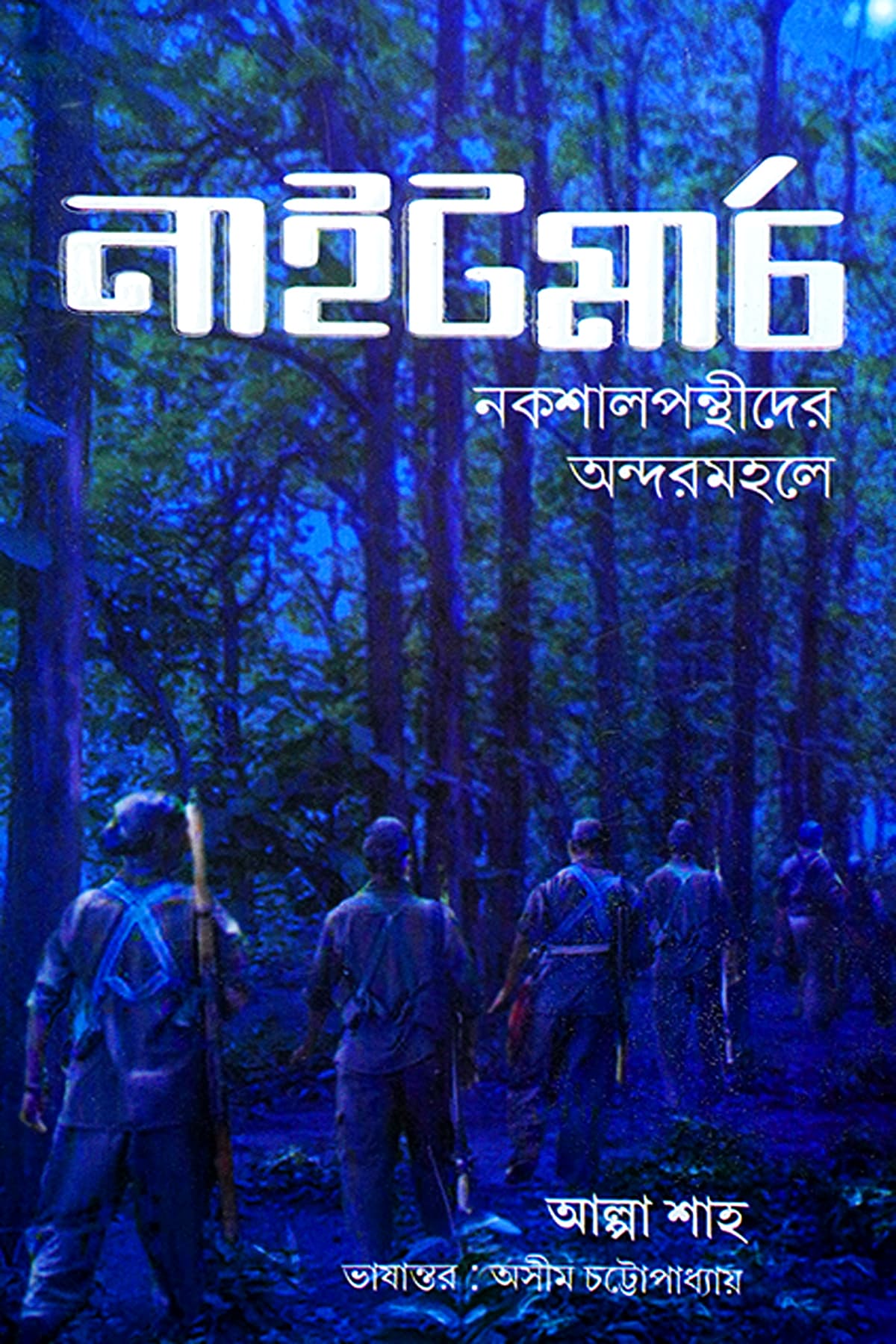
Gondwana, the oldest forested region of India—along with its rivers and Indigenous communities—has protected this subcontinent like a mother. In the course of her anthropological r…
Gondwana, the oldest forested region of India—along with its rivers and Indigenous communities—has protected this subcontinent like a mother. In the course of her anthropological research, the author spent two years here a decade ago to study firsthand the social and cultural traditions of the Adivasis. Not only did she learn the local language, she lived in their homes and became one of them. In this process, the relationship between the Adivasis and the Naxalites became the central focus of her interest. Instead of learning about communist revolutionaries from books, she chose to understand them directly, becoming a companion to one of their platoons on a two-hundred-and-fifty-kilometre journey. She was the only woman in the entire platoon.Though the journey was difficult, she was never without companions. During this time, she gathered unknown accounts of leaders, supporters, and women guerrillas involved in the movement, along with insights into the nexus between contractors and the Maoist movement, corruption, and the montage of cultural degradation—all of which are discussed in this book. She also disagreed with Naxalite leadership on several matters such as gender relations in Adivasi society, the intoxication of mahua, division of labour, and the concept of labour contribution. Her critique comes from someone who shares their pain. How the Naxalites will receive this criticism is something the future will tell. Alla Shah is an Associate Professor in the Department of Anthropology at the London School of Economics and Political Science. She has presented various topics on India on BBC Radio 4 and the World Service.

Alpa Shah is the Statutory Professor of Social Anthropology at Oxford, with a Fellowship at All Souls College. Her research and writings span many themes, including revolutionary insurgency, state and citizenship; terrorism, democracy and human rights; global capitalism, inequality and poverty; agrarian change, precarious labour migration and informal economies of care; indigenous politics, conservation and environmental justice; race, caste, class and gender relations. Much of Alpa’s writings are based on the experience of deep immersive field research among the forest-dwelling indigenous people of eastern India – Adivasis. She has also conducted research in Nepal and among Dalits, stigmatised as Untouchable people.
View all books by Alpa ShahOne of the most distinguished authors and translators of contemporary times, Asim Chattopadhyay spent his early youth in the turbulent and incendiary days of the 1970s, driven by a desire for social change. In later life, he took up editing and translation as his profession, while continuing his creative literary pursuits alongside. He has documented his experiences of a revolutionary life in his novel Pub Akash Lal. He is also the first person to translate Henry Lewis Morgan’s seminal work Ancient Society into Bengali. At present, he is the chief editor of Setu Prakashani.
View all books by Asim Chattapadhyay