Product Overview
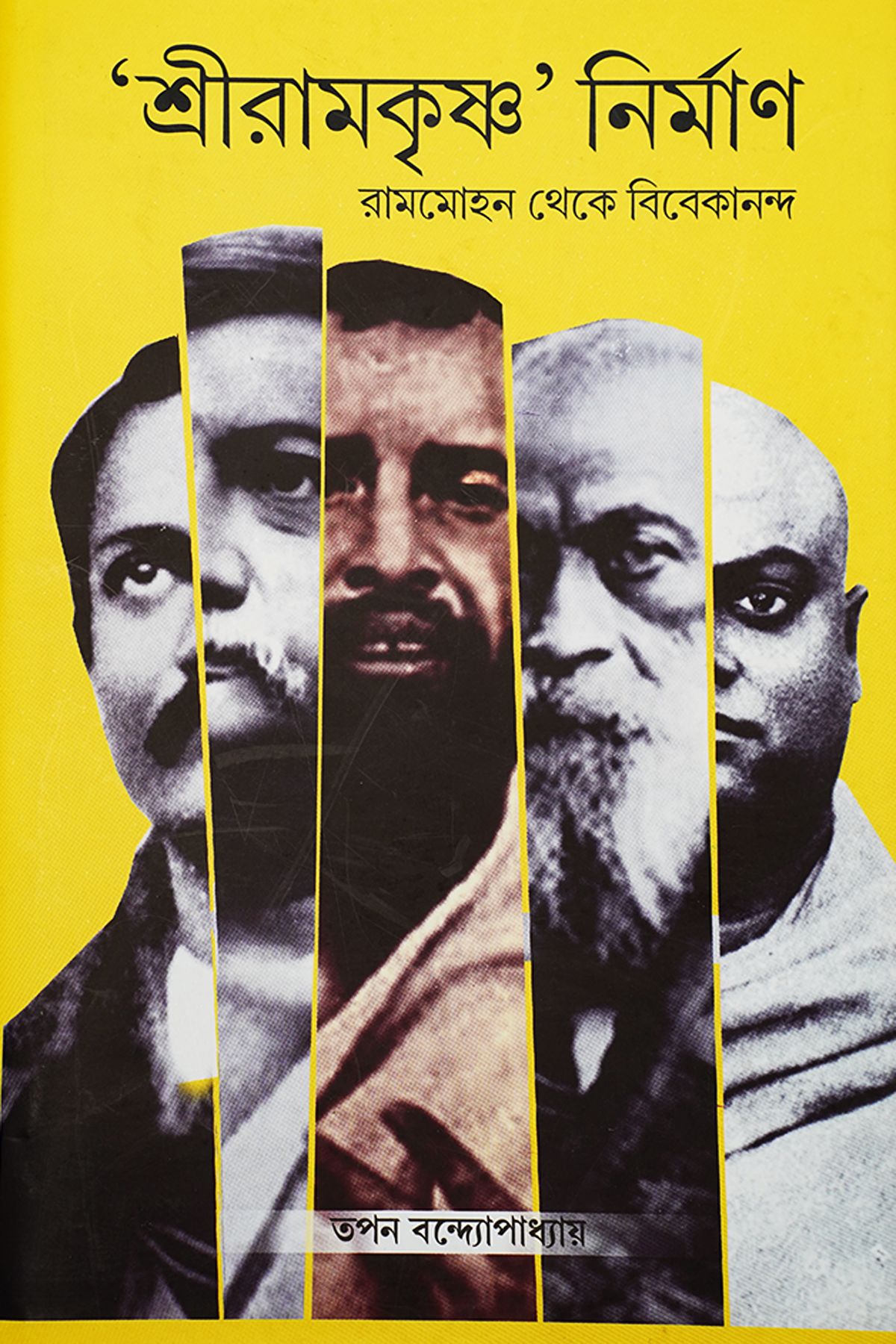
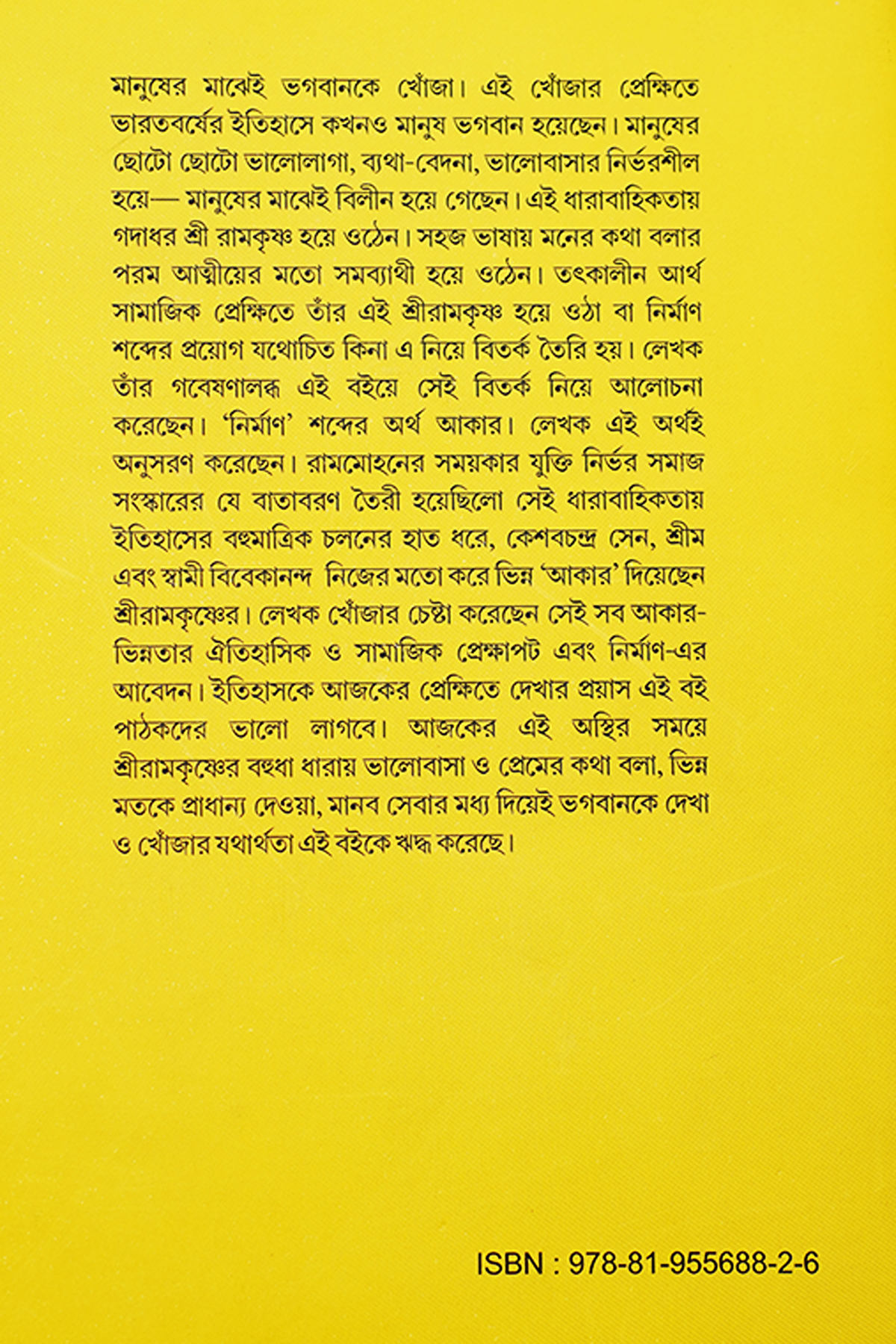
This book explores the idea of seeking God within human beings, a tradition in Indian history where, at times, humans themselves have become divine by dissolving into the everyday joys, sorrows, pains, and loves of ordinary people, and it is within this continuum that Gadadhar emerged as Sri Ramakrishna, becoming a deeply empathetic, intimate presence who spoke the language of the heart in simple terms; debates have arisen over whether the term “construction” is appropriate in describing Ramakrishna’s emergence within the socio-economic context of his time, and drawing on extensive research, the author engages with this debate by using “construction” in its literal sense of “form,” arguing that in the intellectual climate of reason-based social reform initiated during the time of Raja Ram Mohan Roy, the multidimensional flow of history allowed figures such as Keshab Chandra Sen, Sri M, and Swami Vivekananda to each give Sri Ramakrishna a distinct “form” of their own; the book traces the historical and social contexts behind these differing constructions and their appeal, offering a present-day reading of history that will resonate with readers, especially in today’s unsettled times, as it highlights Ramakrishna’s plural paths of love, respect for differing views, and the idea of finding God through service to humanity.
Product Overview
This book explores the idea of seeking God within human beings, a tradition in Indian history where, at times, humans themselves have become divine by dissolving into the everyday joys, sorrows, pains, and loves of ordinary people, and it is within this continuum that Gadadhar emerged as Sri Ramakrishna, becoming a deeply empathetic, intimate presence who spoke the language of the heart in simple terms; debates have arisen over whether the term “construction” is appropriate in describing Ramakrishna’s emergence within the socio-economic context of his time, and drawing on extensive research, the author engages with this debate by using “construction” in its literal sense of “form,” arguing that in the intellectual climate of reason-based social reform initiated during the time of Raja Ram Mohan Roy, the multidimensional flow of history allowed figures such as Keshab Chandra Sen, Sri M, and Swami Vivekananda to each give Sri Ramakrishna a distinct “form” of their own; the book traces the historical and social contexts behind these differing constructions and their appeal, offering a present-day reading of history that will resonate with readers, especially in today’s unsettled times, as it highlights Ramakrishna’s plural paths of love, respect for differing views, and the idea of finding God through service to humanity.
Product Specification
- Genre
- Non- Fiction
- Author
- Tapan Bandyopadhyay
- ISBN
- 978-81-955688-2-6
- Pages
- 520
- Published
- 2022
About the Author

The author Tapan Bandyopadhyay traces his ancestral roots to Balijuri village in Purba Bardhaman district of West Bengal; his schooling was in Dhanbad, while his college and university education took place in Kolkata, after which he joined a central government service, leaving his research in botany unfinished. After taking voluntary retirement two decades later, he devoted himself to carefully researched and reflective work on social and historical themes, publishing essays in various established journals and magazines; shaped by his family tradition and liberal intellectual outlook, his earlier book Sri Ramakrishna Nirmāṇ—From Rammohan to Vivekananda (2022) reflects this lineage, and the present volume stands as yet another expression of his inquisitive vision, alert intellect, and open mind.
View all books by Tapan Bandyopadhyay